

Rifle Skills · Zeroing Guide
By GunSafety4U · Clearwater, Florida · November 12, 2026
The short answer
To set a 50-yard zero on an AR-15 when you only have 25 yards, adjust your sight until the group lands about 1.2 inches below your point of aim. That is roughly 4.5 MOA, or 9 clicks on a 1/2-MOA red dot. Then confirm at 50 yards, because the 25-yard offset is only a starting point.
The 50-yard zero is the most popular setup for a red-dot AR-15 because it keeps the bullet within about 2 inches of your aiming point from the muzzle out to roughly 200 yards. The catch is that not every range, bay or lane gives you 50 yards.
This guide shows how to do it properly from 25, how the popular 36-yard zero compares, and how to use the free printable 25-yard target we host. It also includes a trajectory table we calculated ourselves, so you can see where your rounds will land at each distance.
Free printable target
Red dot optic, 25-yard adjusted zero target for a 50-yard zero with 5.56mm ammunition, calibrated for 1/2-MOA-per-click optics. Print it at 100% scale on US Letter paper.
Download the 25-yard zero target (PDF)Target design by Arma Dynamics, a training company that released its zero targets free to shooters, as The Firearm Blog reported.
Why a 50-yard zero works from 25 yards
Your red dot sits above the barrel, so the bullet starts below your line of sight and climbs to meet it. With a 50-yard zero, the bullet crosses your line of sight at 50 yards on the way up, rises a little under 2 inches above it around 130 yards, and falls back through it again near 200 yards. That is why shooters call it a “50/200” zero.
At 25 yards, the bullet has not reached your line of sight yet. It is still about 1.2 inches low. So if your rounds land 1.2 inches below where the dot sits at 25 yards, they will land on the dot at 50. The target does that math for you: you aim at the colored bullseye and adjust until your group sits on the gray offset mark below it.
How to zero a red dot at 25 yards for 50: step by step
Check your optic’s click value and print the target at 100%
The printable target is calibrated for 1/2 MOA per click. If your optic moves 1 MOA per click, every count you make on the scale needs to be cut in half. Print with scaling turned off, then check the size with a ruler: the numbered scale along the edge runs from 28 to 28 across about 7 inches, so each unit is about 1/8 inch, or one 1/2-MOA click at 25 yards.
Measure 25 yards exactly and get stable
Measure from the muzzle, not the shooting bench. Shoot from a bench with a bag under the handguard and a rear bag under the stock, or from prone with a bipod. Use the same ammunition you plan to carry or train with.
Fire a 3- to 5-shot group at the colored bullseye
Put the dot on the center of the colored bullseye and press slowly. One shot tells you nothing. Use the center of a group, and ignore a single flyer you know you pulled.
Count units from your group to the gray offset mark
Wait for a cold range before you go forward. Using the numbered scale, count the units from the center of your group to the center of the gray offset circle, left or right and up or down. On a 1/2-MOA optic, that count is your number of clicks. Move the dot toward where you want the bullets to go: if the group is low, adjust “up.”
Fire a confirmation group and repeat
Shoot another group at the same colored bullseye. Repeat until the group is centered on the gray mark, then fire one more group to be sure it stays there.
Confirm at 50 yards
The 25-yard offset assumes a particular sight height and load. Fire a group at 50 yards as soon as you can and fine-tune there. At 50 yards, a 1/2-MOA click moves the impact about 0.26 inches.
Click math at a glance
1 MOA is about 1.047 inches at 100 yards. That makes one 1/2-MOA click worth about 0.13 inches at 25 yards, 0.26 inches at 50 yards and 0.52 inches at 100 yards. A 1-MOA click is double each of those.
Where your rounds land: 25, 36, 50 and 100-yard zeros compared
We ran each common zero through a point-mass ballistic model (py-ballisticcalc, G1 drag) for a typical 16-inch AR-15 carbine: 55-grain FMJ at 3,000 fps, a G1 ballistic coefficient of 0.243, a red dot about 2.6 inches over the bore and a standard sea-level atmosphere. Numbers are inches above (+) or below (−) your aiming point.
| Zero | 25 yd | 50 yd | 100 yd | 150 yd | 200 yd | 250 yd | 300 yd | 2nd crossing |
|---|---|---|---|---|---|---|---|---|
| 25 yd | 0.0 | +2.3 | +6.2 | +8.7 | +9.8 | +9.2 | +6.5 | ~360 yd |
| 36 yd | −0.7 | +0.9 | +3.2 | +4.3 | +3.9 | +1.8 | −2.3 | ~275 yd |
| 50 yd | −1.2 | 0.0 | +1.5 | +1.7 | +0.4 | −2.5 | −7.5 | ~210 yd |
| 100 yd | −1.5 | −0.7 | 0.0 | −0.5 | −2.5 | −6.3 | −12.0 | none |
Model output, not a substitute for confirming your own rifle. A 62-grain M855-type load at 2,900 fps produced nearly identical numbers (within 0.2 inches through 300 yards). A 100-yard zero peaks at the zero distance itself, so it never crosses a second time.
50-yard vs. 36-yard zero: which should you pick?
The 50-yard zero is the flatter of the two inside 200 yards. Rounds stay within about 2 inches of the dot from 25 to past 200 yards, which suits home defense, training and most Florida range distances. The 36-yard zero rises higher, a bit over 4 inches around 150 to 175 yards, but stays on a torso-size target farther out. That is why it is popular for duty and general-purpose carbines, a point The Armory Life’s zeroing guide also makes.
A true 25-yard zero is a poor fit for most red-dot carbines. In our model it shoots almost 10 inches high at 200 yards, so a simple “dot on target” hold misses high at middle distances. The Armory Life’s author doesn’t recommend it either.
What most zeroing guides leave out: sight height changes everything
The “50/200” and “36/300” names suggest fixed distances. In our model, the far crossing point moved a lot with sight height and velocity, while the 25-yard offset barely moved with velocity at all:
| Red dot height over bore | 25-yd offset for 50 zero | 50-yd zero crosses again | 36-yd zero crosses again |
|---|---|---|---|
| 2.26 in (low mount) | 1.0 in low | ~187 yd | ~247 yd |
| 2.6 in (co-witness height) | 1.2 in low | ~210 yd | ~276 yd |
| 2.9 in (lower-third height) | 1.3 in low | ~230 yd | ~299 yd |
Two practical takeaways. First, on a typical 16-inch carbine with a co-witness-height dot, “36/300” works out closer to 36/275. Second, any printed 25-yard target assumes one sight height. If your optic sits noticeably higher or lower, the offset is off by one or two tenths of an inch. That is only a click or two at 25 yards, but it moves the far crossing point by 20 yards or more.
Velocity mattered too: dropping from 3,000 to 2,750 fps moved the 50-yard zero’s second crossing from about 210 to about 181 yards, yet changed the 25-yard offset by only 0.02 inches. So the 25-yard method gets you on paper fast, and the 50-yard confirmation is what makes the zero true for your rifle and ammo.
Common zeroing mistakes to avoid
- Chasing single shots. Adjust from the center of a 3- to 5-shot group, never from one hole.
- Turning the wrong way. Read the arrows on the turret. “Up” moves the impact up.
- Shooting off a wobbly rest. A loose rifle opens the group and hides where the zero really is.
- Forgetting mechanical offset up close. Inside about 10 yards, a 50-yard zero puts rounds about 2 inches below the dot. At home-defense distances, hold slightly high for precise shots.
- Skipping the 50-yard check. The 25-yard offset is a shortcut, not a finished zero.
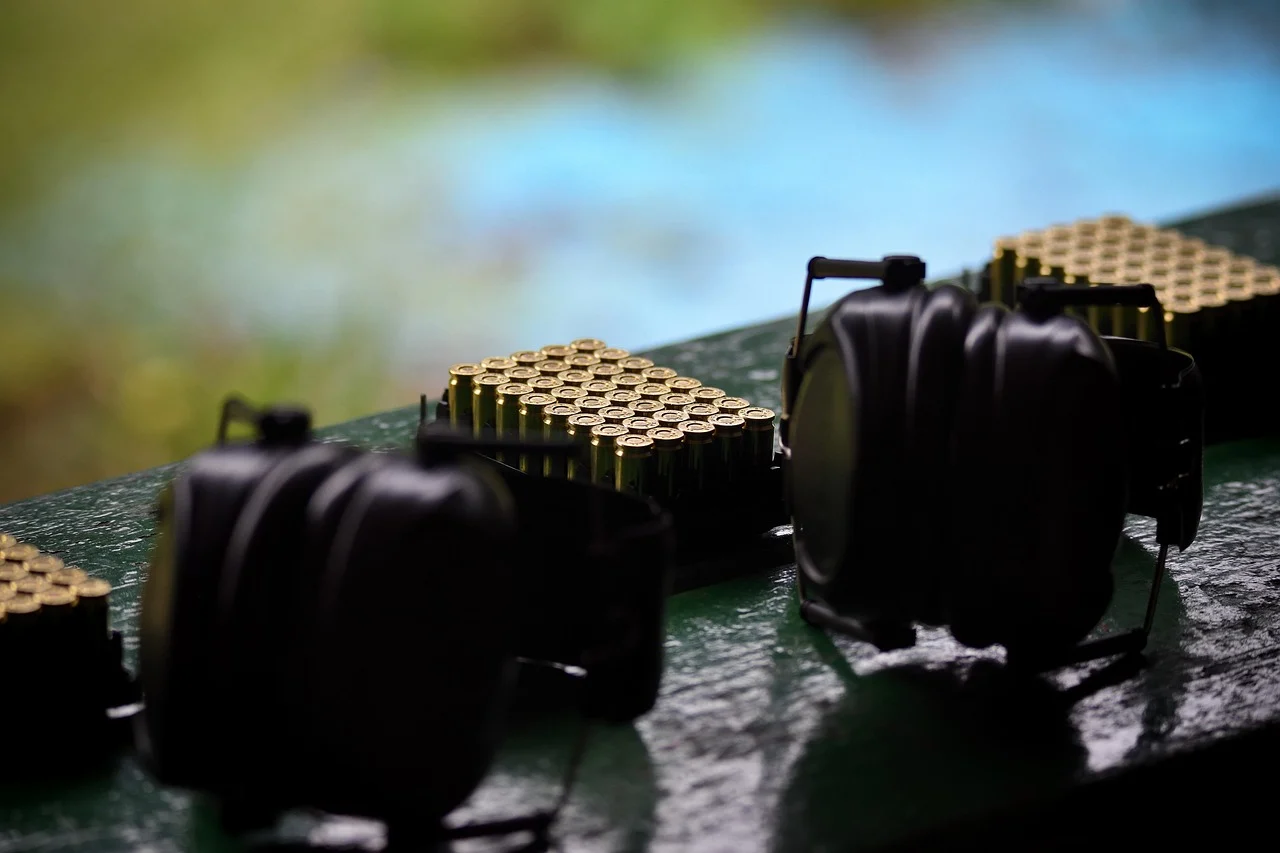
Range safety comes first through all of it: eye and ear protection, muzzle downrange, and no one forward of the line until the range is called cold. If you help run your club’s line, our NRA Range Safety Officer course covers range commands and line management.
Learn it hands-on in Clearwater
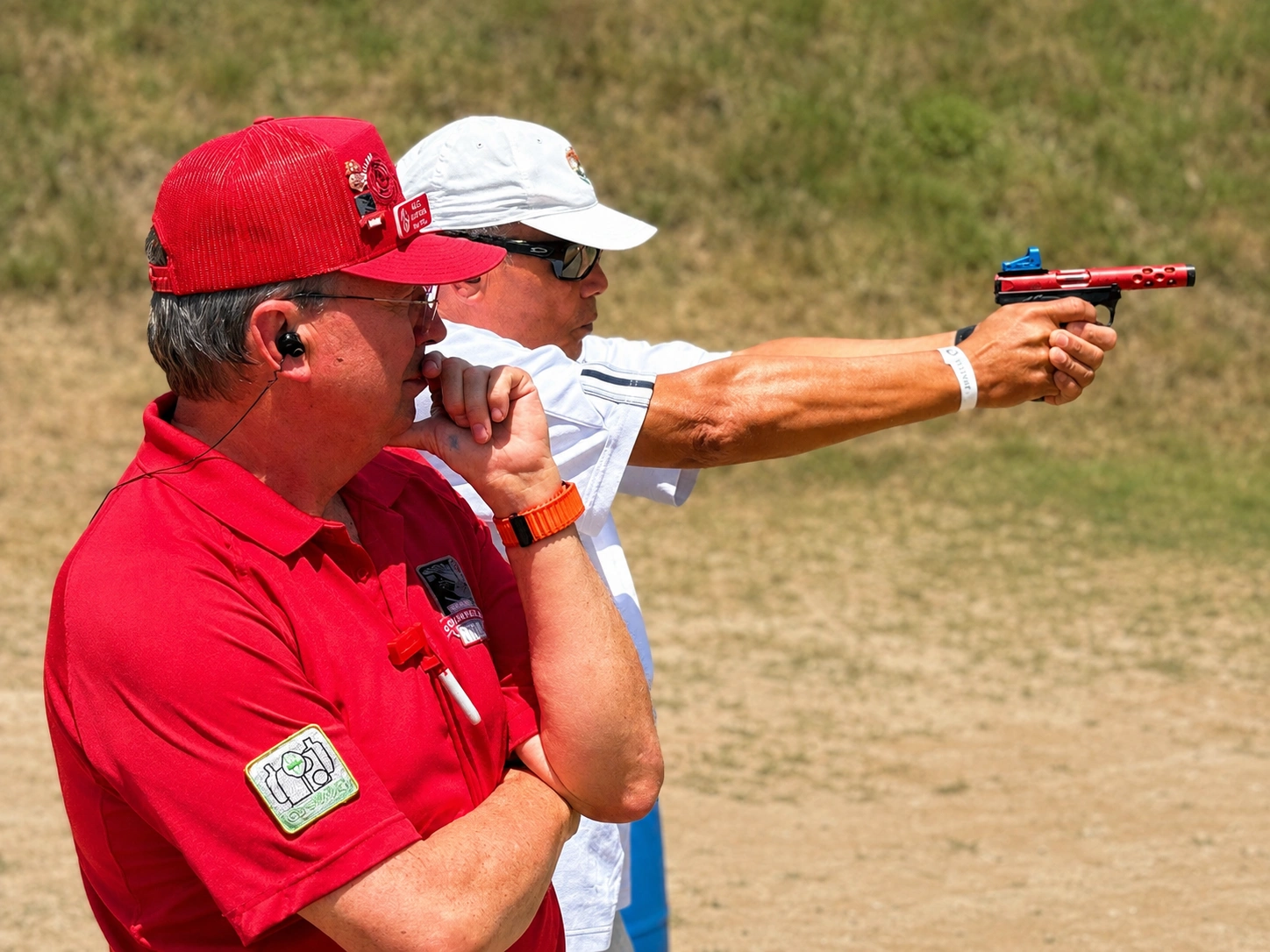
Zeroing is easier with a coach watching your position and trigger press. Brand-new rifle owners can start with our NRA First Steps rifle orientation. Our NRA Basics of Rifle Shooting course covers sight adjustment, shooting positions and the fundamentals behind a tight group. If you want to teach others, the NRA Rifle Instructor course starts with a qualification on a 4.5-inch target at 25 yards. Every class is in our Tampa Bay firearms training course catalog.
Rifle training at the Wyoming Antelope Club, Clearwater
Bring your rifle and your questions. NRA-certified instructors will help you set a zero you can trust.
Frequently asked questions
How far below the target should I hit at 25 yards for a 50-yard zero?
About 1.2 inches below your point of aim, for a typical AR-15 carbine with a red dot about 2.6 inches over the bore. That is roughly 4.5 MOA, or about 9 clicks on a 1/2-MOA optic. Confirm at 50 yards.
Is a 50-yard zero the same as a 200-yard zero?
Close. With 55-grain FMJ at 3,000 fps and a 2.6-inch sight height, a 50-yard zero crosses the line of sight again at about 210 yards. A lower optic or slower ammunition brings that second crossing closer.
Is a 36-yard zero better than a 50-yard zero?
It depends on distance. The 50-yard zero stays within about 2 inches of the dot from 25 to past 200 yards. The 36-yard zero rises a bit over 4 inches around 150 to 175 yards but stays on a torso-size target farther out, crossing again near 275 yards in our model.
How many clicks is 1 inch at 25 yards?
One 1/2-MOA click moves the impact about 0.13 inches at 25 yards, so 1 inch is about 8 clicks. On a 1-MOA optic, it is about 4 clicks.
Can I use the printable target with a 1-MOA red dot?
Yes, but the target is calibrated for 1/2 MOA per click. With a 1-MOA optic, halve the number of grid squares you count before you adjust.
Sources and method
- Trajectory figures: GunSafety4U calculations with the open-source py-ballisticcalc library (G1 drag model, standard atmosphere)
- The Armory Life: Is Your Carbine’s Zero Wrong? (Ian Kenney, Jan. 14, 2024)
- The Firearm Blog: Zero info and free targets from Arma Dynamics (July 14, 2016)
Trajectory numbers are model estimates for the stated assumptions. Your rifle, ammunition, optic height and conditions will differ. Always confirm your zero with live fire at distance and follow your range’s safety rules.