Instructor Training · Florida Guide
By GunSafety4U · Clearwater, Florida · November 14, 2026
The short answer
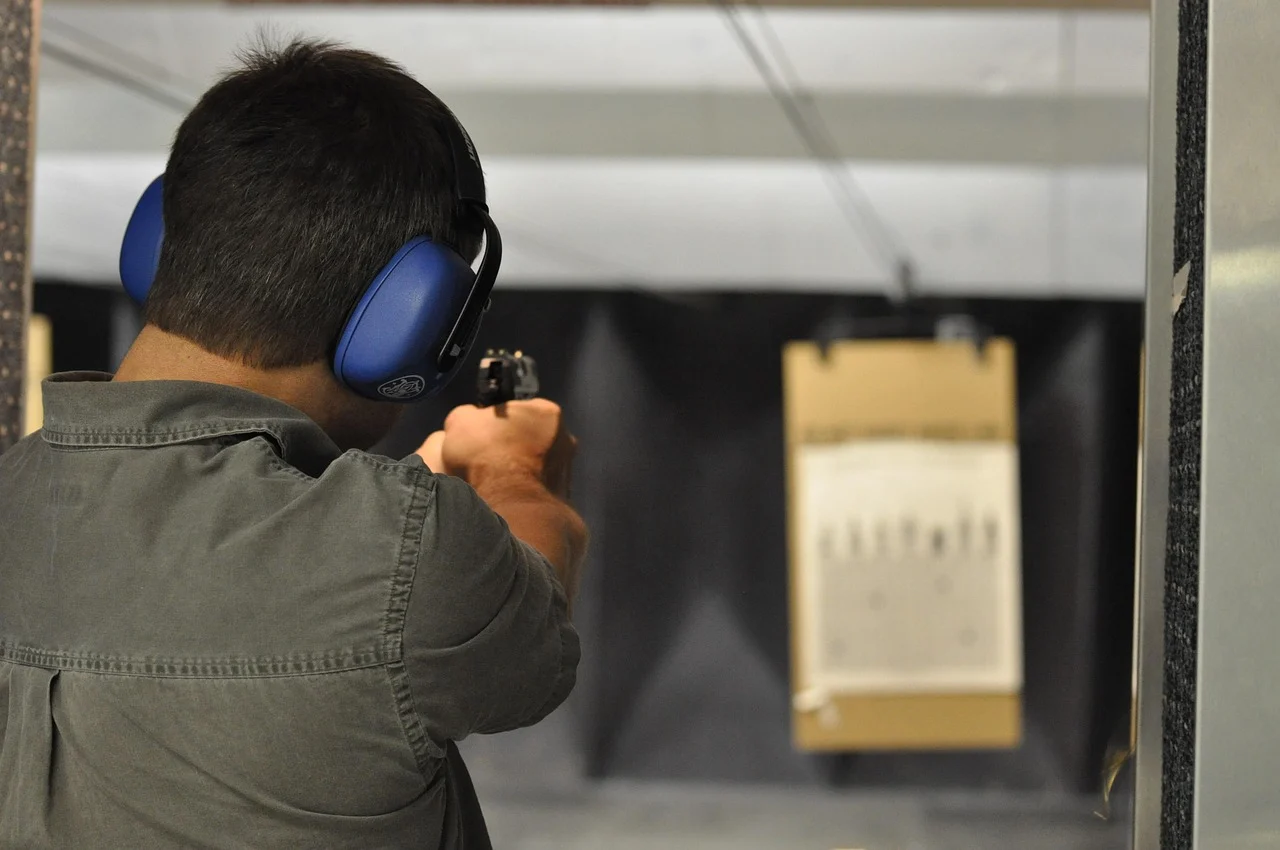
To become an NRA certified instructor in Florida, complete the NRA basic course in the discipline you want to teach, pass a pre-course questionnaire and shooting qualification given by an NRA Training Counselor, then finish that discipline’s instructor course and earn the Training Counselor’s endorsement. Most candidates start with pistol, a 16-hour course.
Florida does not issue its own “NRA instructor” credential. The certification comes from the National Rifle Association, and the only people who can award it are NRA Training Counselors. What Florida adds is a reason the credential matters here: an NRA certified instructor can teach the classes Floridians use to qualify for a concealed weapon license.
This guide covers what the certification lets you do in Florida, how it differs from the state’s Class K firearms instructor license, the exact steps, the order to take the ratings in, and what it costs at GunSafety4U, where every instructor course is taught by NRA Training Counselor Geoff Davis.
In this guide
- What NRA instructor certification lets you do in Florida
- NRA instructor vs. Florida Class K license
- How to become an NRA instructor: 6 steps
- Which rating to start with: the instructor pathway
- What the pre-course qualification looks like
- What it costs in Tampa Bay
- The Florida rule new instructors miss
- FAQ
What NRA instructor certification lets you do in Florida
Nationally, an NRA certification lets you organize and teach the courses in the NRA Basic Firearm Training Program, such as NRA Basics of Pistol Shooting. You also need a valid NRA Instructor ID to buy the official NRA course materials, according to NRA Firearm Training.
In Florida, it does something more. To get a concealed weapon license, an applicant must show competence with a firearm under Fla. Stat. § 790.06(2)(h). Three of the seven ways to do that run through NRA training:
- Completing any National Rifle Association firearms safety or training course
- Completing a public class from a firearms training school or similar organization that uses instructors certified by the NRA, the Criminal Justice Standards and Training Commission, or the Florida Department of Agriculture and Consumer Services
- Completing any firearms training or safety course taught by a state-certified or NRA certified firearms instructor
In other words, an NRA certified instructor can teach the class a Floridian uses to qualify for a concealed weapon license. Permitless carry has been law since 2023, but a license still matters for reciprocity in other states and for the purchase waiting-period exemption. For more on that choice, see our guide to CWFL vs. CWP vs. CCW in Florida.
NRA instructor vs. Florida Class K license: which do you need?
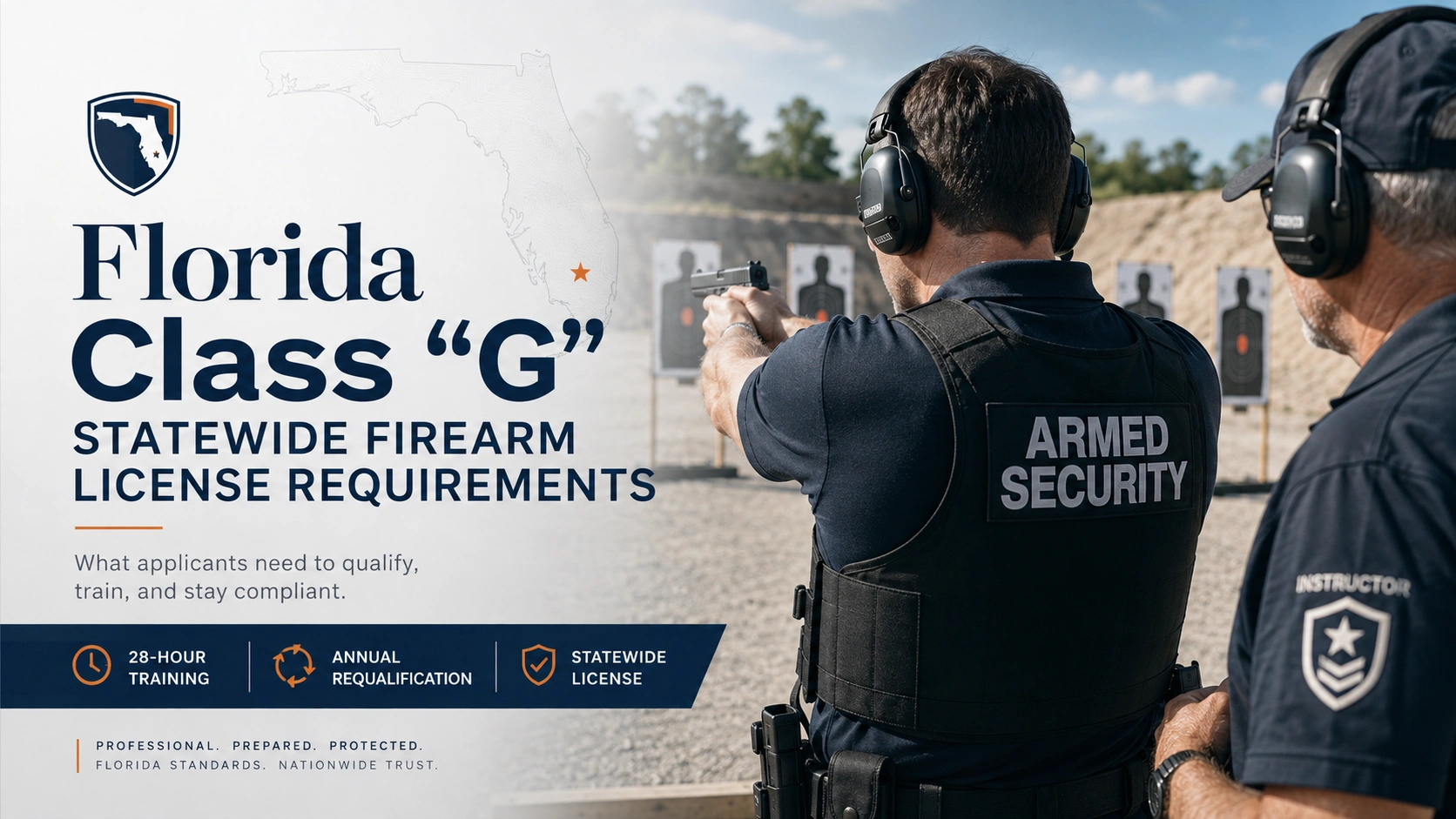
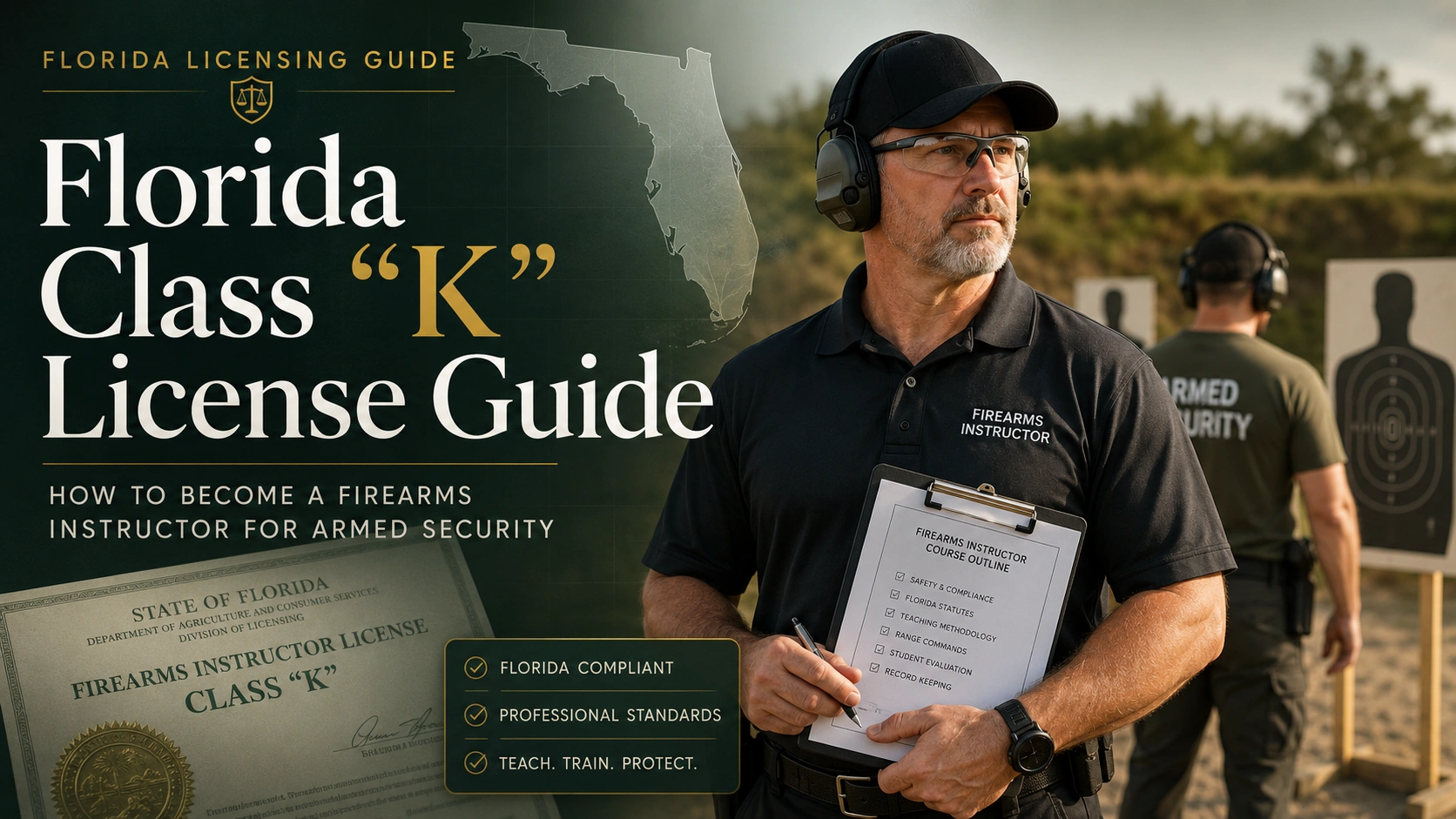
People searching “how to become a firearms instructor in Florida” are often asking about two different credentials. The NRA certification is for teaching civilians. The state’s Class K Firearms Instructor License is required for anyone who gives classroom or range instruction to Class G armed security applicants. A standard NRA pistol, rifle or shotgun instructor rating doesn’t qualify you for it. Under Fla. Stat. § 493.6105(6)(a), the one NRA credential that does is a valid NRA Private Security Firearm Instructor Certificate issued within the last three years.
| NRA certified instructor | Florida Class K license | |
|---|---|---|
| Issued by | NRA, through an NRA Training Counselor | FDACS Division of Licensing |
| Lets you teach | NRA basic courses, including classes that satisfy Florida’s concealed weapon license training requirement | Classroom and range instruction for Class G armed security applicants |
| How you qualify | Basic course, pre-course qualification, instructor course, Training Counselor endorsement | One of four certificates: CJSTC firearms instructor, NRA Private Security Firearm Instructor (issued within 3 years), federal law enforcement firearms instructor, or qualifying military firearms instructor service. Then a state exam |
| Best for | Civilians who want to teach new shooters, concealed carry students, clubs and ranges | Law enforcement, military and private security firearms instructors who train armed security officers |
If you are aiming at security work, read our full Florida Class K firearms instructor license guide. Many instructors eventually hold both.
How to become an NRA instructor: 6 steps
These steps follow the NRA’s published requirements. Where a detail is how GunSafety4U runs it, we say so.
Complete the basic course in your discipline
The NRA requires the student course first: NRA Basics of Pistol Shooting for pistol (the instructor-led version, not the online one), NRA Basics of Rifle Shooting for rifle, and so on. You need to know the course from the student’s seat before you teach it. Start with our NRA Basics of Pistol Shooting class.
Get comfortable with every action type
The NRA expects candidates to be “intimately familiar with each action type” in the discipline. For pistol, GunSafety4U asks candidates to show safe handling of single- and double-action revolvers and at least one semi-automatic. For rifle: bolt, lever and semi-automatic. For shotgun: pump, hinge and semi-automatic.
Pass the questionnaire and pre-course qualification
Before the course, the Training Counselor reviews a written questionnaire and runs qualification exercises to confirm safe handling and shooting skill. At GunSafety4U, the prerequisites are sent after a short interview about your questionnaire. Details are in the qualification section below.
Take the instructor course, including Basic Instructor Training
Every NRA instructor course has two parts: Basic Instructor Training (BIT), which covers NRA policies, ethics, organizing a course and teaching methods, and the discipline-specific portion. Role-playing is central. The NRA recommends at least four candidates per class, with 10 to 12 ideal, because candidates teach parts of the course to each other.
Pass the exam and earn the Training Counselor’s endorsement
You complete an instructor certification exam, and the Training Counselor evaluates how you handle firearms, use training aids and follow the lesson plans. Certification requires that Counselor’s endorsement. Passing the exam alone is not enough.
Set up your instructor account and start teaching
Once certified, you manage your credentials and report the courses you teach through your NRAInstructors.org account, and students can confirm your status with the NRA’s instructor verification tool. Consider assisting an experienced instructor team on a few classes before you run your own.
Which rating to start with: the instructor pathway
NRA instructor ratings are discipline-specific, and several build on each other. Pistol is the usual first rating because the personal protection and CCW instructor courses require it.
| Instructor rating | You need first | NRA course length |
|---|---|---|
| Pistol Instructor | NRA Basics of Pistol Shooting (instructor-led) | 16 hours |
| Rifle Instructor | NRA Basics of Rifle Shooting | 16 hours |
| Shotgun Instructor | NRA Basics of Shotgun Shooting | 17 hours |
| Personal Protection Inside the Home Instructor | NRA Certified Pistol Instructor (GunSafety4U also requires the PPITH student course) | 15 hours |
| Personal Protection Outside the Home Instructor | Pistol and PPITH Instructor ratings, plus the PPOTH student course with 90% or better on its exam | 22 hours |
| CCW Instructor | Pistol Instructor rating and the NRA Basic CCW student course (GunSafety4U prerequisite) | About 16 hours at GunSafety4U |
| Chief Range Safety Officer | NRA Range Safety Officer course | About 16 hours at GunSafety4U |
Course lengths come from the NRA’s course descriptions except where marked. For the CCW, PPITH and PPOTH instructor courses, GunSafety4U also asks that your Basic Instructor Training be no more than a year old.
The top of the ladder is NRA Training Counselor, the rating that certifies new instructors. The NRA requires at least 24 months as a certified instructor with the pistol rating plus one other live-fire discipline, at least 10 NRA courses taught as lead trainer, and at least 50 students taught across two live-fire disciplines, per the NRA Training Counselor page.
What the pre-course qualification looks like
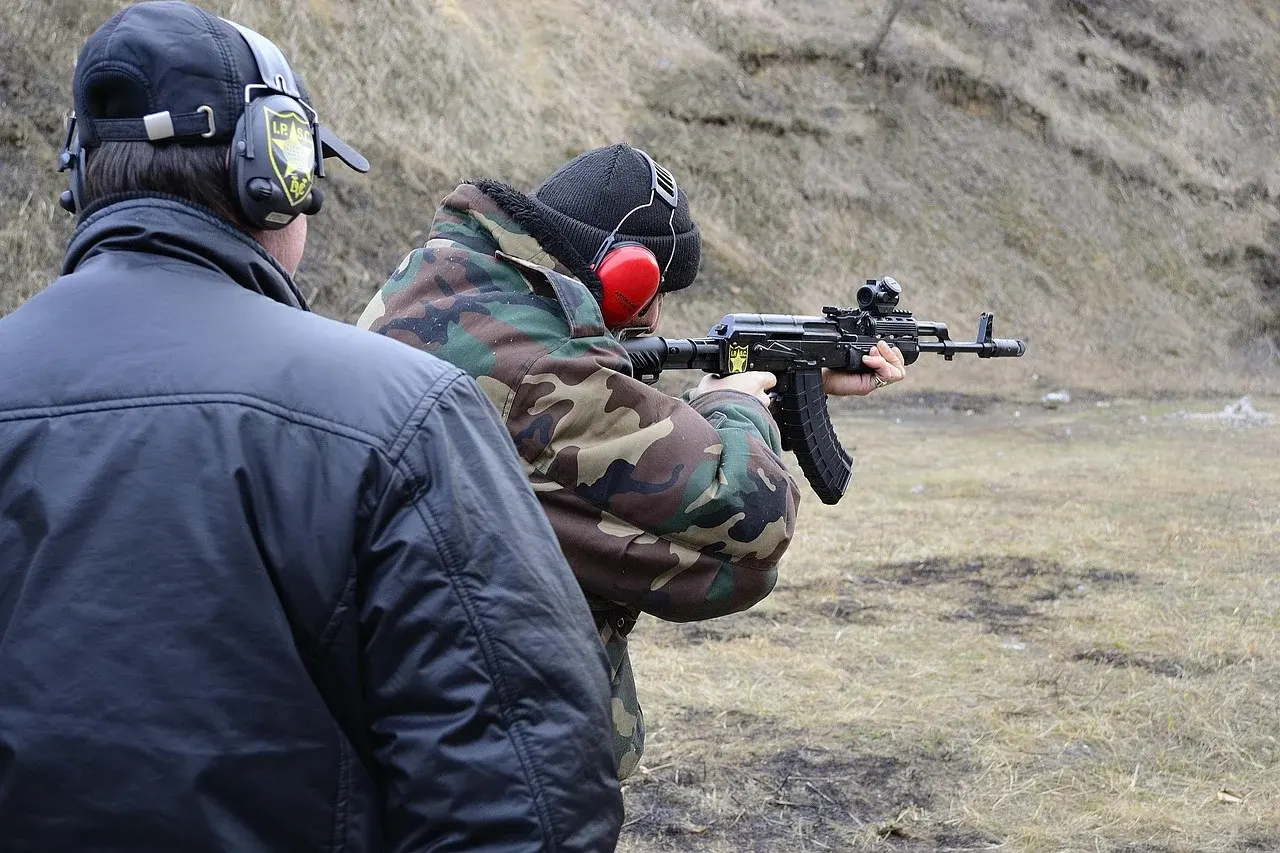
The NRA leaves the qualification exercises to the Training Counselor. This is what GunSafety4U candidates shoot:
| Discipline | Qualification at GunSafety4U |
|---|---|
| Pistol | Level 4 instructor target. A .22 LR pistol and red dot optics are permitted. |
| Rifle | 4.5-inch instructor target at 25 yards. Optics are permitted. |
| Shotgun | 13 of 25 targets on a trap range, or documented ATA or NSSA match scores above 50%. |
| CCW, PPITH, PPOTH | The instructor course of fire for that discipline, shot during the course. Red dot optics are permitted. |
Rifle candidates should arrive with a confirmed zero. Our guide to setting a 50-yard zero at 25 yards walks through it, with a free printable target.
These standards reward fundamentals over speed: grip, sight alignment and trigger control while someone is watching. If you are unsure of your score, schedule range time on a scored target before the course, or book a session through our competition skills coaching.
What it costs to become an NRA instructor in Tampa Bay
Instructor course prices vary widely, so compare what is included. GunSafety4U’s prices cover tuition, books and range fees. Ammunition is extra, and VETS/LEO family discounts are available. Classes are held at the Wyoming Antelope Club in Clearwater.
| Course | Price | Ammo | Time |
|---|---|---|---|
| Pistol Instructor | $395 | 200 rounds | ~16 hours |
| Rifle Instructor | $395 | 100 rounds | ~16 hours |
| Shotgun Instructor | $395 | 75 rounds | ~16 hours |
| CCW Instructor | $395 | 250 rounds | ~16 hours |
| PPITH Instructor | $425 | 200 rounds | ~16 hours |
| PPOTH Instructor | $425 | 250 rounds | ~22 hours |
| Range Safety Officer (student course) | $145 | None | See course page |
| Chief Range Safety Officer | $395 | None | ~16 hours |
Budget for the prerequisite student course too. NRA Basics of Pistol Shooting is $150 at GunSafety4U and NRA Basic CCW is $175. Courses run over two days or four evening sessions. See all of them in one place on our NRA instructor training page.
The Florida rule new instructors miss: you must keep live-fire records
Most guides stop at certification. In Florida, the job comes with a paperwork duty written into the concealed weapon license statute. Section 790.06(2)(h) says anyone who conducts a qualifying course, or who attests as an instructor that a student completed one, must keep records certifying that they watched the student safely handle and discharge the firearm in person, and that this included live fire with real ammunition.
In practice, that means three habits from your first class:
- Keep a roster for every class with the date, location and each student’s name.
- Record each student’s live-fire portion, done in your physical presence, before you sign a certificate.
- Never sign a certificate or affidavit for a student whose live fire you did not personally observe.
Basic Instructor Training already covers how to organize a course. Build your record-keeping into that plan before your first class. Our instructor graduates are listed on our instructors we’ve trained page.
Certify with an NRA Training Counselor in Clearwater
Every GunSafety4U instructor course is taught by Geoff Davis, an NRA Training Counselor, NRA Level 2 pistol coach and Florida Class K instructor. Call to book your questionnaire interview and pre-course qualification.
Bottom line
Becoming an NRA instructor in Florida takes four things: the basic course, a passing pre-course qualification, a discipline-specific instructor course with Basic Instructor Training, and an NRA Training Counselor’s endorsement. Start with pistol if you want to teach concealed carry or personal protection. If you want to train armed security officers, you will also need the state’s separate Class K license. Whatever you teach, keep live-fire records from day one. Browse every class in our Tampa Bay firearms training course catalog.
Frequently asked questions
How do I become an NRA certified instructor in Florida?
Complete the NRA basic course in the discipline you want to teach, pass a pre-course questionnaire and qualification given by an NRA Training Counselor, then complete that discipline’s instructor course, including Basic Instructor Training, and earn the Training Counselor’s endorsement.
How long is the NRA pistol instructor course?
The NRA describes the Instructor Pistol Shooting Course as a 16-hour course. At GunSafety4U it runs over two days or four evening sessions.
How much does NRA instructor training cost in Tampa Bay?
At GunSafety4U, the Pistol, Rifle, Shotgun and CCW instructor courses are $395 each, and the PPITH and PPOTH instructor courses are $425, including tuition, books and range fees. Ammunition is extra.
Can an NRA instructor teach Florida concealed carry classes?
Yes. Under section 790.06(2)(h), completing any firearms training or safety course taught by an NRA certified firearms instructor is one of the ways a Florida concealed weapon license applicant can show competence with a firearm. The instructor must keep records showing they observed the student’s live fire in person.
Does NRA instructor certification count toward a Florida Class K license?
Not a standard NRA pistol, rifle or shotgun instructor rating. Section 493.6105(6)(a) accepts a valid NRA Private Security Firearm Instructor Certificate issued within three years, along with a CJSTC firearms instructor certificate, a federal law enforcement firearms instructor certificate, or qualifying military firearms instructor service. Applicants also pass a state exam.
What is an NRA Training Counselor?
An NRA Training Counselor is an experienced instructor certified by the NRA to train and certify new instructors. The NRA requires at least 24 months as a certified instructor, at least 10 NRA courses taught as lead trainer and at least 50 students taught across two live-fire disciplines.
Sources
- NRA Firearm Training: Become an Instructor (requirements, course lengths and prerequisites)
- NRA Firearm Training: Become a Training Counselor
- NRA Training: NRA Instructor Pistol Shooting Course and Verify Instructors
- Florida Legislature: Fla. Stat. § 790.06, license to carry concealed weapon or concealed firearm
- Florida Legislature: Fla. Stat. § 493.6105, Class “K” qualifying certificates
- FDACS: Class “K” Firearms Instructor License Requirements
Prices, round counts and qualification standards are GunSafety4U’s as of November 14, 2026 and may change; confirm when you register. NRA requirements are as published by the NRA on that date. This guide is general information and is not legal advice.