
Florida Gun Laws · News
By GunSafety4U · Tampa Bay, Florida · November 17, 2026
Florida Attorney General James Uthmeier issued a formal legal opinion on Friday, November 13, concluding that the state’s 2018 ban on bump-fire stocks violates the Second Amendment and announcing that his office will no longer defend convictions under it. The opinion came one week after a November 6 memo in which he told law enforcement and prosecutors that law-abiding Floridians may possess short-barreled rifles and shotguns without federal registration or a tax stamp.
Together, the two moves change how the state’s top lawyer treats these firearms and accessories. They are also easy to over-read. Neither one repealed a statute, and neither one binds the people who prosecute most gun cases in Florida.
Below: what each document says, the federal changes behind them, the part of the story most coverage skipped, and what a careful gun owner should do before buying, building or carrying anything.
The two actions at a glance
| Nov. 6, 2026 | AG memo: law-abiding residents may possess an SBR or SBS under § 790.221 without NFA registration or a tax stamp |
| Nov. 13, 2026 | AG legal opinion: the bump-fire stock ban in § 790.222 violates the Second Amendment |
| What the AG will do | Not defend convictions under either statute on appeal |
| Statutes repealed? | No. Both remain in the Florida Statutes |
| Next chance to change the law | 2027 Regular Session, which convenes March 2, 2027 |
What the bump stock opinion says
The six-page opinion, posted by the Attorney General’s Office, answers one question: whether Fla. Stat. § 790.222 violates the Second Amendment. Uthmeier concludes that it does. He writes that the law “imposes a categorical prohibition on an entire class of firearm components,” that a rifle fitted with a bump stock still fires one shot per function of the trigger, and that he could find no historical tradition of banning accessories that only change how quickly a trigger resets.
The opinion ends by stating that the statute “cannot be lawfully enforced by Executive Branch officials in Florida” and that his office will not defend a conviction under it. In a post on X announcing it, he said people are being arrested and prosecuted under the 2018 law, which he described as overly broad.
Section 790.222 was part of the Marjory Stoneman Douglas High School Public Safety Act, passed after the February 2018 Parkland shooting. That law also raised the minimum age to buy a rifle to 21 and created Florida’s red flag law, CBS News Miami reported. The bump stock ban is a third-degree felony and covers importing, selling, transferring, giving away or simply possessing a bump-fire stock.
The federal ban is already gone. In Garland v. Cargill (2024), the U.S. Supreme Court ruled 6-3 that a bump stock does not turn a semiautomatic rifle into a machine gun under federal law, because the trigger must still be released and reengaged for each shot. As the News Service of Florida noted in the Tampa Bay Times, Florida’s separate state ban stayed in force after that ruling. CBS News Miami added that Cargill decided what the federal statute covers, not whether bans like Florida’s violate the Second Amendment.
What the SBR and SBS memo says
Florida’s short-barreled firearm law, Fla. Stat. § 790.221, makes it a second-degree felony to own or possess a short-barreled rifle, short-barreled shotgun or machine gun. It has always carried one exception: firearms “lawfully owned and possessed under provisions of federal law.” For decades, that meant an ATF-approved, registered item with a tax stamp.
The federal side changed this fall. Congress cut the National Firearms Act’s making and transfer tax to $0 for SBRs, SBSs and suppressors. A federal court in Texas then ruled in Silencer Shop Foundation v. ATF that the NFA’s approval and registration rules could no longer stand for those items, and the government did not appeal. On October 9, 2026, the ATF announced it would stop enforcing those requirements nationwide for SBRs, SBSs, suppressors and “any other weapons.”
Uthmeier’s November 6 memo to “Florida’s Law Enforcement Agencies and Prosecuting Authorities” reads § 790.221 in that light. Because these firearms can now be lawfully owned under federal law, he concluded, Florida’s statute does not independently make possessing them a crime, the Alachua Chronicle reported. He posted the letter on X with a promise not to defend a conviction on appeal.
The memo has limits. People prohibited from having firearms still cannot have SBRs or SBSs, location-based restrictions still apply, and the guidance applies only inside Florida. Machine guns are untouched: the ATF says the NFA still applies in full to machine guns and destructive devices.
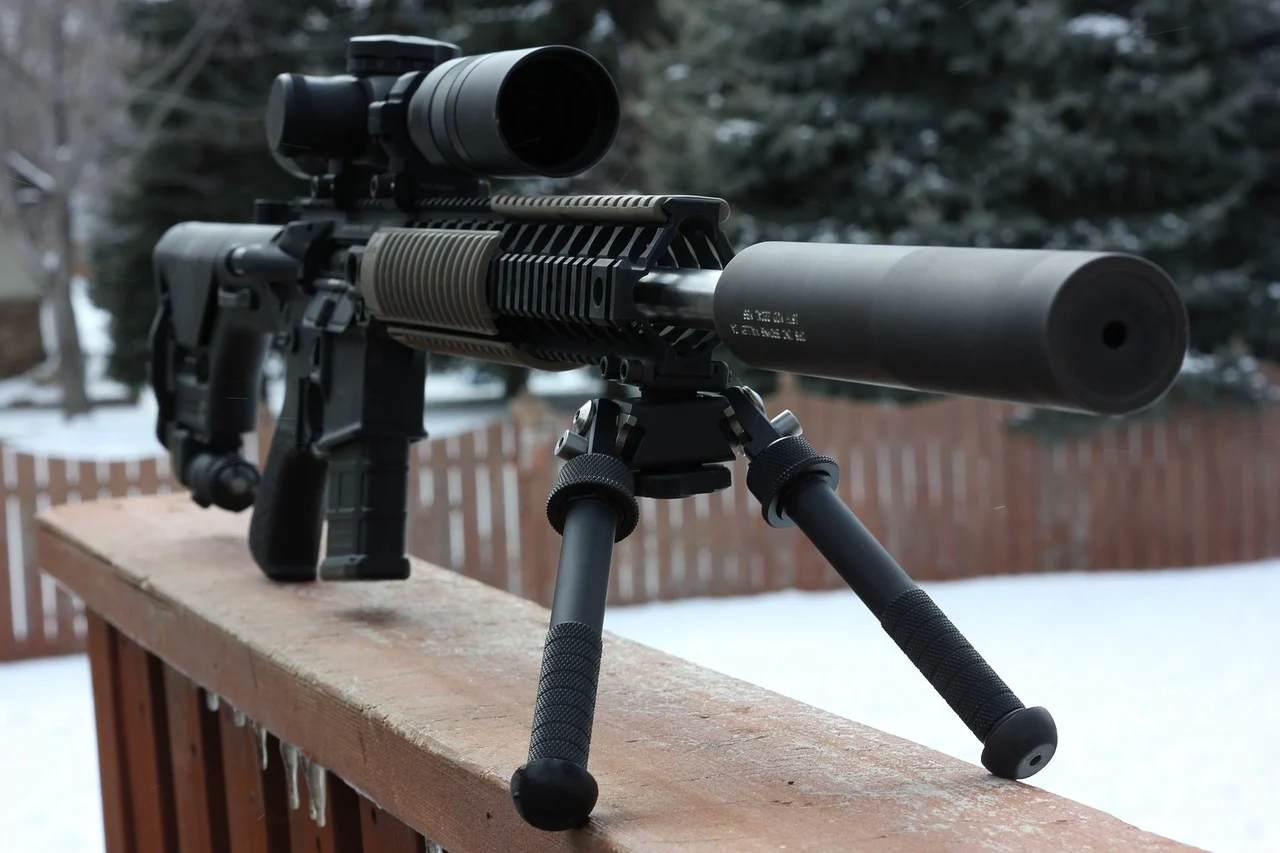
The angle most coverage is missing: the AG does not run Florida’s trial courts
Most headlines read like these items are now plainly legal. The legal picture is narrower, for three reasons.
1. Elected state attorneys prosecute, not the AG. Under Article V, section 17 of the Florida Constitution, each of the state’s judicial circuits elects its own state attorney, who is “the prosecuting officer of all trial courts in that circuit.” The Attorney General’s promise is about defending convictions on appeal. An arrest, a charge and a trial all happen before an appeal.
2. An AG opinion is not a court ruling. Florida’s appellate courts have said Attorney General opinions are not binding on Florida courts, though they carry “great weight” (Browning v. Florida Prosecuting Attorneys Ass’n). Both statutes are still on the books, and no Florida court has struck either one down.
3. Each circuit decides for itself. Before the AG’s memo, State Attorney Brian Kramer of the Eighth Judicial Circuit (Alachua, Baker, Bradford, Gilchrist, Levy and Union counties) told local sheriffs and police chiefs on October 11 that Florida law does not require federal registration for an SBR or SBS, USA Carry reported. That memo governs only the six counties his office serves. The state attorneys in every other circuit, including the ones serving Pinellas, Pasco and Hillsborough, make their own charging decisions.
| Who | What they control |
|---|---|
| Florida Legislature | Whether § 790.221 and § 790.222 stay in the statutes |
| Courts | Whether either statute is unconstitutional or means what the AG says |
| Elected state attorneys | Whether to file charges in trial court in their circuit |
| Attorney General | Whether the state defends a conviction on appeal, and guidance to agencies |
One more timing detail circulating online is wrong. Some social posts say the Legislature meets in January. The Florida Senate’s 2027 session calendar shows the Regular Session convening on March 2, 2027, as the constitution requires in odd-numbered years. That is the earliest regular opportunity to repeal or rewrite either statute. Governor-elect Byron Donalds, who voted against the 2018 law as a state House member, takes office in January.

What about binary and forced-reset triggers?
Florida’s statute does not use the words “bump stock.” It defines a “bump-fire stock” as any kit, tool, accessory or device used to make a firearm mimic automatic fire, or to fire faster than a person could unassisted. That broad wording is why Florida owners have long asked whether other trigger devices are covered.
The opinion itself groups bump stocks with “short or forced reset triggers” and trigger lightening kits as common parts that change a firearm’s firing characteristics, and Uthmeier’s post refers to “trigger enhancements.” That tells you how the AG’s office sees the issue. It does not settle how a local prosecutor or a court would apply § 790.222 to a specific device. Until the Legislature or a court acts, treat that as an open question.
Federal rules that still apply
The ATF’s updated NFA transfer guidance, last revised November 16, spells out what has not changed:
Crossing state lines with an SBR or SBS still needs ATF approval.
Owners must file ATF Form 5320.20 before taking a short-barreled rifle or shotgun across a state line, even if it is unregistered.
Machine guns and destructive devices are unchanged.
The $200 tax and every NFA requirement still apply to them.
Dealer rules still apply.
Licensed dealers still keep records, complete a Form 4473 and run a background check before transferring to an unlicensed buyer. Makers must serialize firearms and silencers.
On suppressors specifically: § 790.221 lists short-barreled rifles, short-barreled shotguns and machine guns. It does not list suppressors, so the Florida question the AG answered is about SBRs and SBSs. On the federal side, suppressors are covered by the same October 9 ATF non-enforcement guidance.
What this means for Tampa Bay gun owners
If you are thinking about an SBR, an SBS or a trigger accessory, the safest order of operations is simple: check whether you are a prohibited person, keep it inside Florida unless you have filed a Form 5320.20, and get a written opinion from a Florida firearms attorney before you rely on guidance that a local state attorney has not adopted. Keep a copy of the AG’s memo and opinion with your records. For the wider rules on carry, vehicles, buying and storage, see our Florida gun laws guide.
The legal question is only half of it. A shorter barrel puts the muzzle closer to your support hand and to anyone beside you, and a faster rate of fire leaves less time to correct a mistake. Muzzle discipline, a stable grip and a clear backstop matter more, not less. Ranges also set their own rules on rapid fire, so ask before you bring a trigger accessory to a firing line.
Our NRA Basics of Rifle Shooting course covers safe handling, shooting positions and range rules from the ground up. If you help run a club or a private range, the NRA Range Safety Officer course teaches you how to manage a firing line safely. Every class we teach is listed in our Tampa Bay firearms training course catalog.
Train with NRA-certified instructors in Tampa Bay
Laws change. Safe rifle handling does not. Build the fundamentals with an instructor before you change your setup.
Bottom line
In one week, Florida’s Attorney General said the state’s short-barreled firearm law no longer reaches law-abiding owners of SBRs and SBSs, and that the 2018 bump stock ban is unconstitutional. Both positions change how the state will handle appeals. Neither repealed a statute, and neither binds the elected state attorneys who file charges or the courts that decide them. Until the Legislature meets on March 2, 2027 or a court rules, Florida owners should treat these as real but limited changes.
Frequently asked questions
Are bump stocks legal in Florida now?
Section 790.222, which makes possessing a bump-fire stock a third-degree felony, is still in the Florida Statutes. On November 13, 2026, Attorney General James Uthmeier issued an opinion calling it unconstitutional and said his office will not defend convictions under it. That opinion does not repeal the law or bind Florida courts.
Is an SBR legal in Florida without a tax stamp?
According to the Attorney General’s November 6, 2026 memo, law-abiding residents may possess a short-barreled rifle or shotgun in Florida without NFA registration or a tax stamp, because section 790.221 excepts firearms lawfully owned under federal law. Prohibited persons are still barred, location restrictions still apply, and the guidance covers only Florida.
Does the Attorney General’s opinion bind local prosecutors?
No. Under Article V, section 17 of the Florida Constitution, each judicial circuit elects a state attorney who prosecutes in its trial courts. The Attorney General’s commitment is about not defending convictions on appeal, and Florida courts have held that Attorney General opinions are not binding on them.
Can I take an unregistered SBR out of Florida?
Not without approval. The ATF says owners must still file ATF Form 5320.20 before taking a short-barreled rifle or shotgun across state lines, even if it is unregistered.
When could Florida lawmakers change these laws?
The Florida Legislature’s 2027 Regular Session convenes on March 2, 2027, according to the Florida Senate’s session calendar. That is the earliest regular session in which lawmakers could repeal or rewrite section 790.221 or section 790.222.
Sources
- Florida Attorney General: Opinion on section 790.222, bump-fire stocks (Nov. 13, 2026)
- Attorney General James Uthmeier on X: bump stock opinion announcement (Nov. 13, 2026) and SBR and SBS guidance letter (Nov. 6, 2026)
- Tampa Bay Times / News Service of Florida: Uthmeier says he won’t defend Florida’s ban on bump stocks (Nov. 14, 2026)
- CBS News Miami: Florida AG calls state’s bump stock ban unconstitutional (Nov. 14, 2026)
- Alachua Chronicle: Florida AG issues guidance on possession of short-barreled rifles and shotguns (Nov. 6, 2026)
- USA Carry: Eighth Circuit State Attorney’s SBR and SBS guidance (Oct. 18, 2026)
- ATF: ATF issues guidance on NFA transfers and Update to NFA Transfer Guidance
- Florida Legislature: Fla. Stat. § 790.221 and Fla. Stat. § 790.222
- The Florida Senate: Florida Constitution, Art. V, § 17 and 2027 Regular Session dates
- CourtListener: Browning v. Florida Prosecuting Attorneys Ass’n
This article is general information about Florida and federal firearm law as of November 17, 2026 and is not legal advice. Attorney General opinions and agency enforcement policies can change. Confirm your situation with a Florida firearms attorney before you buy, build, modify or transport any firearm discussed here.