Firearm Safety · Safe Storage
By GunSafety4U · Tampa Bay, Florida · November 6, 2026
An Osceola County grand jury has indicted a Georgia mother on a charge of aggravated manslaughter of a child after her 2-year-old son, Brayden Tennyson, was shot with her unsecured gun by his 4-year-old cousin during a family trip to Central Florida in July. The State Attorney’s Office confirmed the indictment on Wednesday, November 4, WFTV reported.
The case is a tragedy for one family first. It is also a hard reminder for every gun owner heading into the busiest travel weeks of the year: Florida law sets a specific standard for keeping loaded guns away from children, and that standard applies to visitors exactly as it does to residents.
Below: what happened, why the charge changed, the gap in Florida law that most coverage skipped, and a practical storage checklist for holiday travel.
The case at a glance
| Charge | Aggravated manslaughter of a child, by grand jury indictment |
| Original recommendation | Felony culpable negligence, recommended by the Osceola County Sheriff’s Office in July |
| Indictment filed | October 27, 2026, per court records cited by ClickOrlando |
| Shooting | July 12, 2026, outside a vacation rental on Scrapbook Street in Osceola County |
| Prosecutor | State Attorney Monique Worrell |
| Status | Pending. The accused is presumed innocent. |
What happened in Osceola County
The family had traveled from Georgia to celebrate Brayden’s birthday, according to WESH 2. Deputies said a 4-year-old relative found an unsecured gun inside a vehicle and fired it, striking Brayden, who was also in the vehicle and unsupervised, ClickOrlando reported. Brayden died at Arnold Palmer Hospital for Children.
Detectives said the gun belonged to Brayden’s mother, 37-year-old Shakelia Tennyson of Louisville, Georgia. At a July news conference, Osceola County Sheriff Chris Blackmon held up a gun lock as he spoke about the case.
In a statement, the State Attorney’s Office said the decision to bring the charge was not made lightly, that it reflects the office’s duty to children who depend on adults to keep them safe, and that Ms. Tennyson, like anyone accused of a crime, is presumed innocent. State Attorney Worrell put the core of it plainly: “no child should ever be able to reach a loaded firearm.” The office declined to discuss the evidence.
A note on the record
Outlets spell the mother’s first name differently: WFTV and ClickOrlando use “Shakelia,” WESH uses “Shakeila.” We use the spelling two of the three outlets reported. We are not naming the 4-year-old, and we make no claims about the evidence beyond what has been publicly reported.
Why the charge changed, and what each charge means
The sheriff’s office first recommended felony culpable negligence. That charge comes from Fla. Stat. § 784.05(3), which makes it a third-degree felony to store or leave a loaded firearm within the reach or easy access of a minor if the minor gets the gun and uses it to injure or kill someone.
The grand jury instead returned aggravated manslaughter of a child under Fla. Stat. § 782.07(3): causing the death of a person under 18 through culpable negligence as defined in the child-neglect statute. That is a first-degree felony, two full classes above the original charge.
| Felony culpable negligence | Aggravated manslaughter of a child | |
|---|---|---|
| Statute | § 784.05(3) | § 782.07(3) |
| Core conduct | Leaving a loaded gun within reach or easy access of a minor, who then uses it to injure or kill | Causing the death of a child through culpable negligence (child neglect) |
| Age covered | Minor under 16 | Person under 18 |
| Felony class | Third degree | First degree |
Section 784.05(3) also contains two details that explain the slow timeline in cases like this one. When a child is accidentally shot by another family member, no arrest under that subsection can be made until 7 days after the shooting. And when a child dies and a parent or guardian is involved, investigators must send their findings to the state attorney, who decides what to file. That is what happened here: the sheriff referred the case in July, and prosecutors took it to a grand jury.
The angle most coverage missed: “securely encased” is not “child-secure”
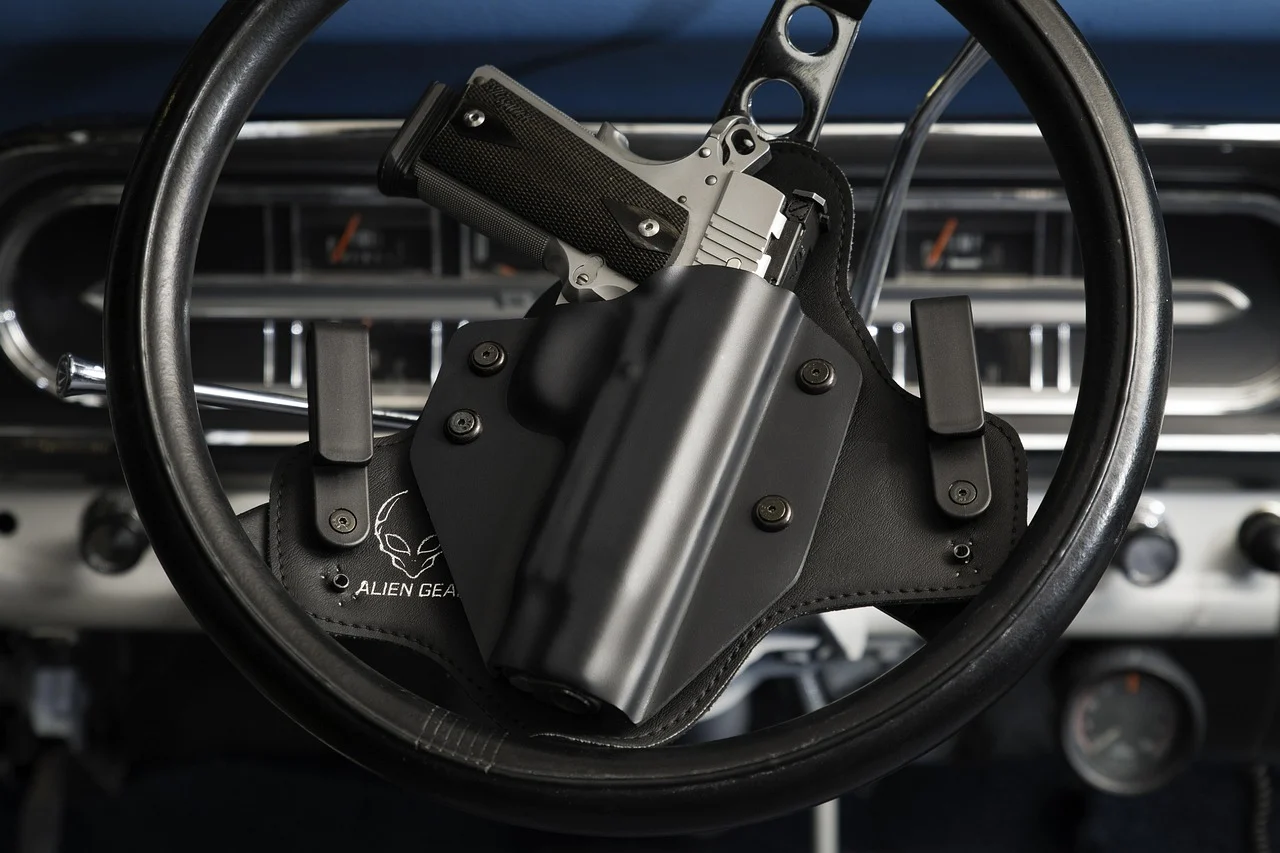
This shooting happened in a car, and Florida’s vehicle rules are where a lot of good-faith gun owners get the wrong idea. Under § 790.25(4), an adult who lawfully possesses a handgun may keep it inside a private vehicle if it is “securely encased” or otherwise not readily accessible for immediate use.
The definition of “securely encased” in § 790.001(15) is broad: a glove compartment, whether or not locked; a snapped holster; a gun case, whether or not locked; a zippered case; or any closed box that needs a lid opened. Every one of those is a legal way to transport a handgun. Most of them are things a 4-year-old can open in seconds.
The child-access law uses a different, stricter test. Under § 790.174 and the safe harbor in § 784.05(3)(a), the protection comes from a securely locked box or container, a location a reasonable person would believe is secure, or a trigger lock. The only alternative is keeping the gun on your body or close enough to use as quickly as if you were carrying it.
| Florida standard | What satisfies it | Stops a child? |
|---|---|---|
| “Securely encased” (§ 790.001(15)) for vehicle transport | Unlocked glove box, snapped holster, unlocked or zippered case, closed container | Often not |
| Child-access safe harbor (§ 790.174, § 784.05(3)(a)) | Securely locked box or container, reasonably secure location, or trigger lock | Designed to |
| On your person (§ 790.174(1) exception) | Carried on your body or within immediate reach and control | Only while you stay with it |
We do not know exactly where or how the gun was kept in this case beyond deputies describing it as unsecured, and nothing here is a comment on the evidence. The general point stands on its own: a gun can be legally stored for transport and still be within a child’s reach. Out-of-state visitors are bound by the same Florida rules as residents; the Florida Department of Agriculture and Consumer Services says residents and nonresidents who carry here are subject to the same laws and restrictions.
A holiday travel storage checklist
Thanksgiving and December travel mean more guns in more cars, rental homes and relatives’ guest rooms. The National Shooting Sports Foundation’s Project ChildSafe notes that children spend more time at home over the holidays and are more likely to encounter a gun without supervision. These steps line up with Florida law and with Project ChildSafe guidance:
Keep it on you or lock it up. Nothing in between.
Florida’s storage law gives you two options when children may be around: the gun stays on your body or within immediate reach, or it goes into a locked container or gets a trigger lock.
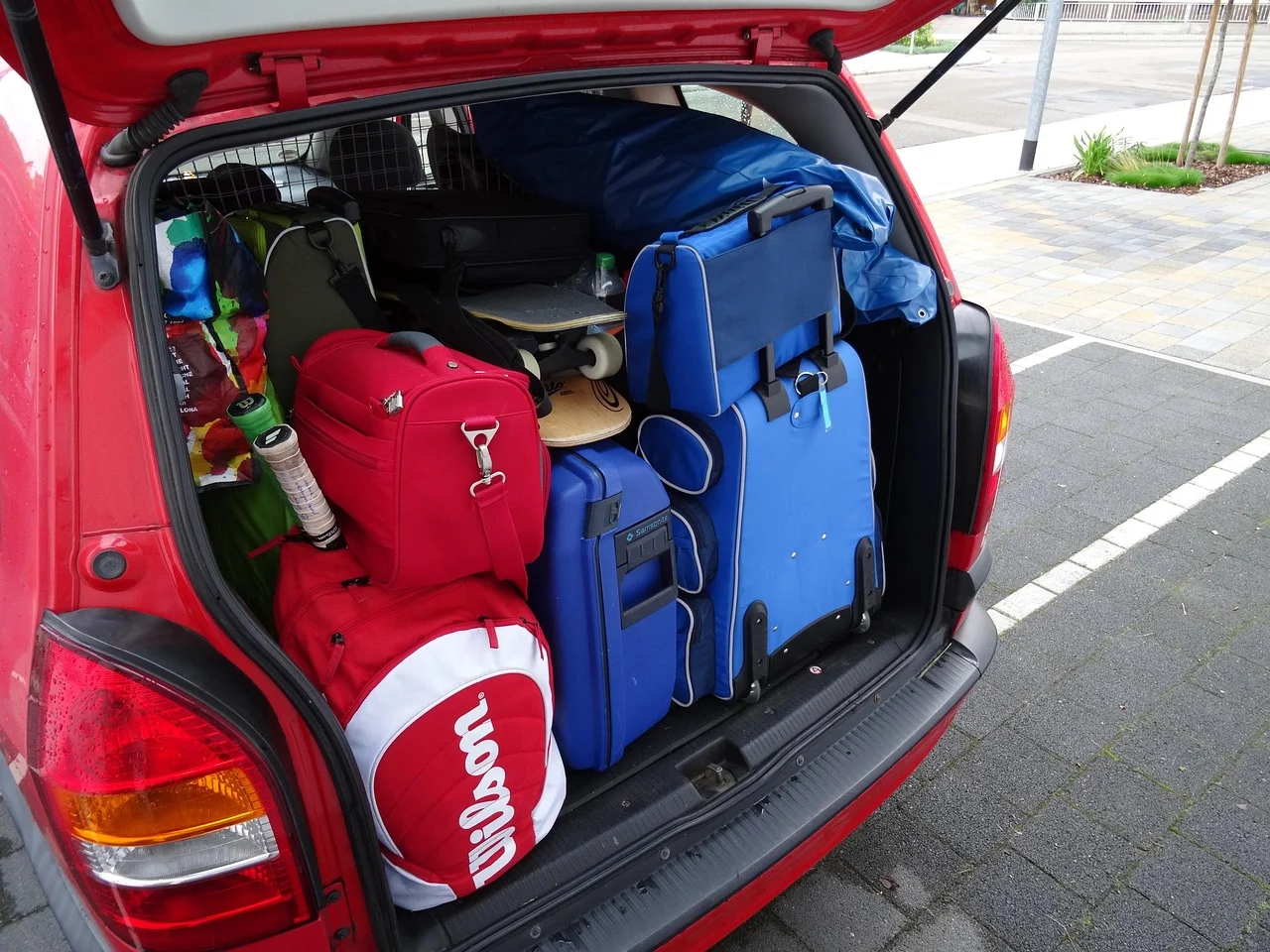
Treat the car as a temporary holding spot, not a storage spot.
An unlocked glove box or console is legal for transport. When kids are in or around the vehicle, it is not safe. A lockable case or vehicle safe closes that gap.
Bring your own lockbox to rentals and family homes.
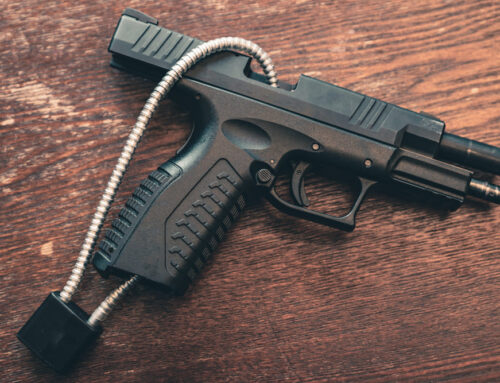
A vacation rental or a relative’s house is not set up for your gun. Pack a portable lockbox or cable lock. Project ChildSafe offers free safety kits that include a cable-style gun lock; find where to pick one up at projectchildsafe.org.
Unload and separate when you are not carrying.
Project ChildSafe recommends storing firearms unloaded when not in use, with ammunition stored separately and out of sight.
Ask, and talk to your kids.
Before children visit another home, it is reasonable to ask whether guns there are locked up. And teach children the basic rule: if you find a gun, don’t touch it, leave the area and tell an adult.
What this means for Florida gun owners
Since Florida’s permitless carry law took effect in 2023, an adult who meets the eligibility rules can carry a concealed handgun without a license or a class. That puts more responsibility on owners to learn the habits a class would teach, and safe storage is the one with the least room for error. For the full picture of what Florida allows and requires, see our Florida gun laws guide.
At GunSafety4U, storage is part of the foundation, not an afterthought. Our NRA Basics of Pistol Shooting course starts with the NRA’s gun safety rules, including storing guns so they are not accessible to unauthorized persons. Families who keep a gun for home defense can go deeper in NRA Personal Protection Inside the Home, and brand-new owners can start with a short NRA First Steps pistol orientation. You can see every option in our Tampa Bay firearms training course catalog.
Train with NRA-certified instructors in Tampa Bay
Safe handling and storage habits are easier to build with a qualified instructor than to figure out after a scare. Classes run in the Tampa Bay area for new owners, families and experienced shooters.
Bottom line
A grand jury has charged a mother with a first-degree felony after a 4-year-old found her unsecured gun in a vehicle and fatally shot her 2-year-old son. She is presumed innocent, and the case is just beginning. For everyone else, the lesson does not depend on the verdict: in Florida, a gun that is legal to carry in a glove box can still be within a child’s reach. When children are anywhere near, keep the gun on you or lock it up.
Frequently asked questions
What is Florida’s safe storage law?
Section 790.174 requires a person who leaves a loaded firearm where they know or reasonably should know a minor under 16 is likely to get it to keep the gun in a securely locked box or container, in a location a reasonable person would believe is secure, or secured with a trigger lock, unless the gun is carried on the body or within immediate reach.
What is the penalty if a child gets an unsecured gun in Florida?
Under section 784.05(3), leaving a loaded firearm within the reach or easy access of a minor under 16 is a third-degree felony if the minor uses it to injure or kill someone. When a child dies, prosecutors may pursue more serious charges, such as aggravated manslaughter of a child under section 782.07(3), a first-degree felony.
Is an unlocked glove box legal for a gun in Florida?
For transport, yes. Section 790.001(15) counts a glove compartment, whether or not locked, as “securely encased.” But it does not meet the safe storage standard for children, which calls for a securely locked box or container, a reasonably secure location or a trigger lock.
Do Florida’s gun storage laws apply to visitors from other states?
Yes. Florida’s Department of Agriculture and Consumer Services says residents and nonresidents who carry in Florida are subject to the same laws and restrictions.
What charge does Shakelia Tennyson face?
An Osceola County grand jury indicted her on a charge of aggravated manslaughter of a child in the death of her 2-year-old son, Brayden Tennyson. The sheriff’s office had first recommended felony culpable negligence. She is presumed innocent.
Sources
- WFTV: Georgia mother indicted after 4-year-old fatally shot her son in Osceola County (Nov. 4, 2026)
- WKMG ClickOrlando: Mom faces manslaughter charge after 2-year-old accidentally shot in Florida (Nov. 4, 2026)
- WESH 2: Mom indicted after 2-year-old son accidentally shot by cousin while vacationing in Florida (Nov. 4, 2026)
- Florida Legislature: Fla. Stat. § 790.174, safe storage of firearms required
- Florida Legislature: Fla. Stat. § 784.05, culpable negligence
- Florida Legislature: Fla. Stat. § 782.07, manslaughter; aggravated manslaughter of a child
- Florida Legislature: Fla. Stat. § 790.001, definitions (“securely encased”)
- Florida Legislature: Fla. Stat. § 790.25, possession in a private conveyance
- Project ChildSafe (NSSF): Five firearms safety tips to practice this holiday season
- FDACS: Concealed Weapon License Reciprocity (visiting Florida)
This article is general information about Florida firearm law as of November 6, 2026 and is not legal advice. The criminal case described is pending, and the accused is presumed innocent. Confirm current requirements with a Florida attorney or the agencies cited.